Study area
Cetacean Sanctuary Research


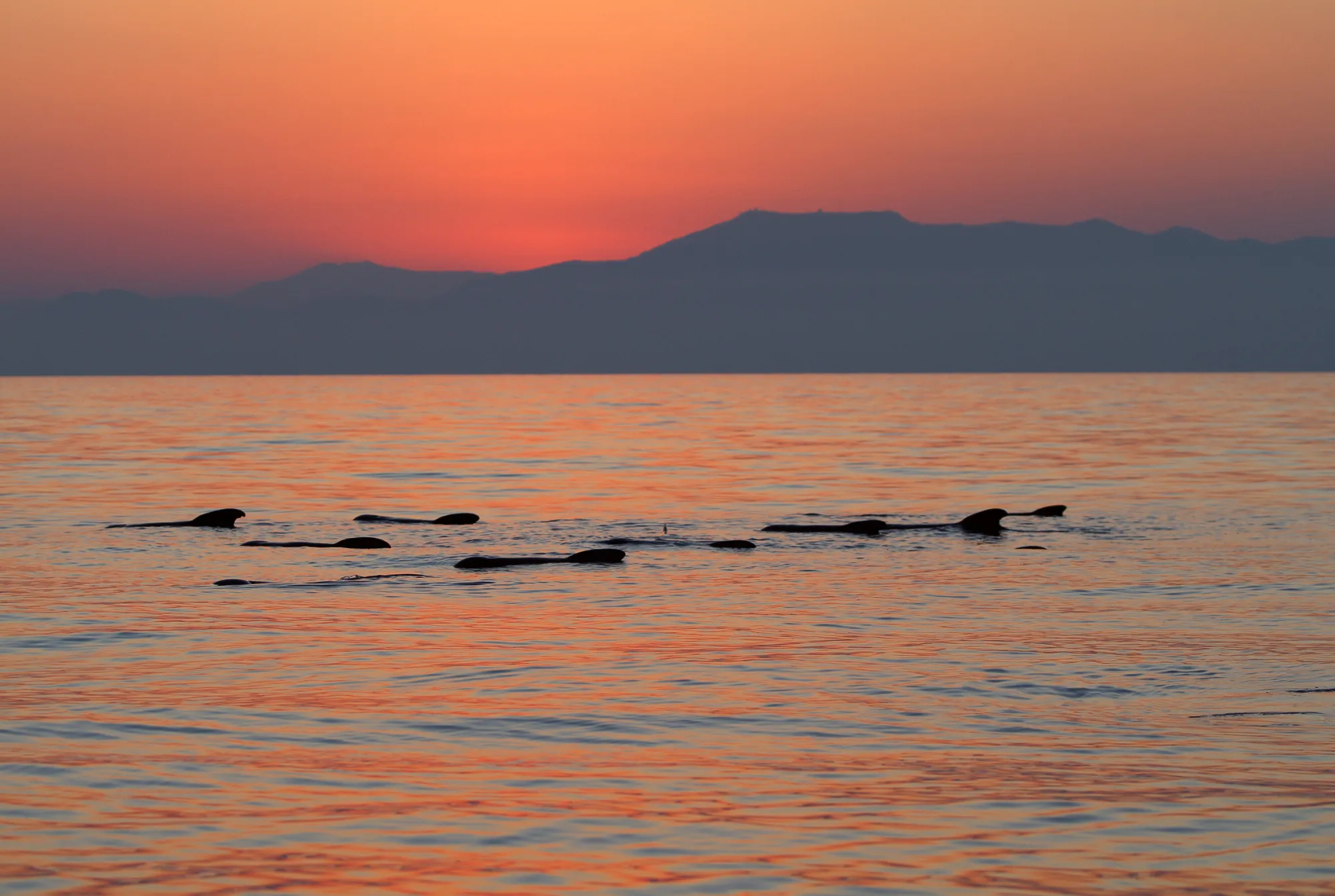
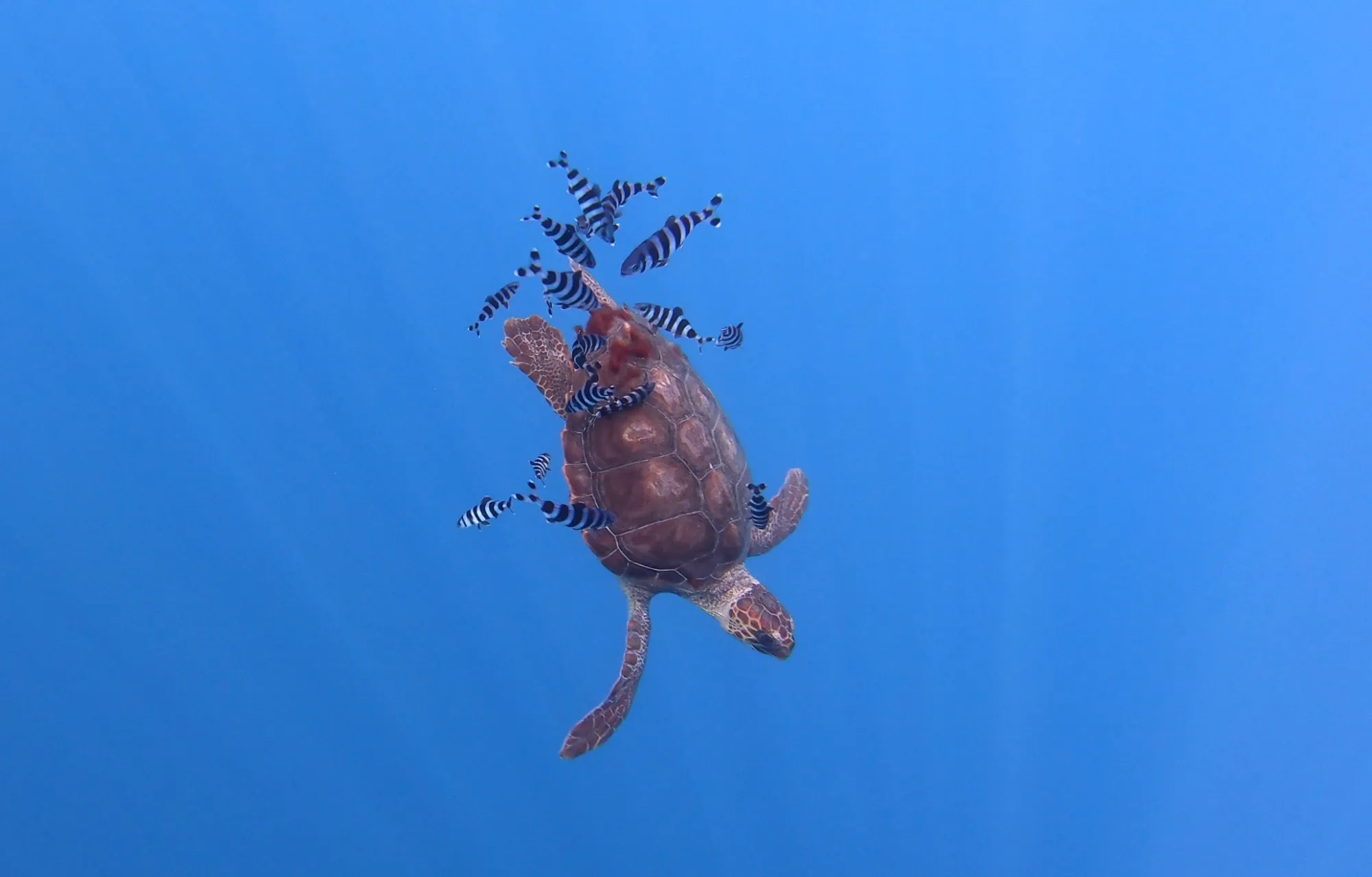
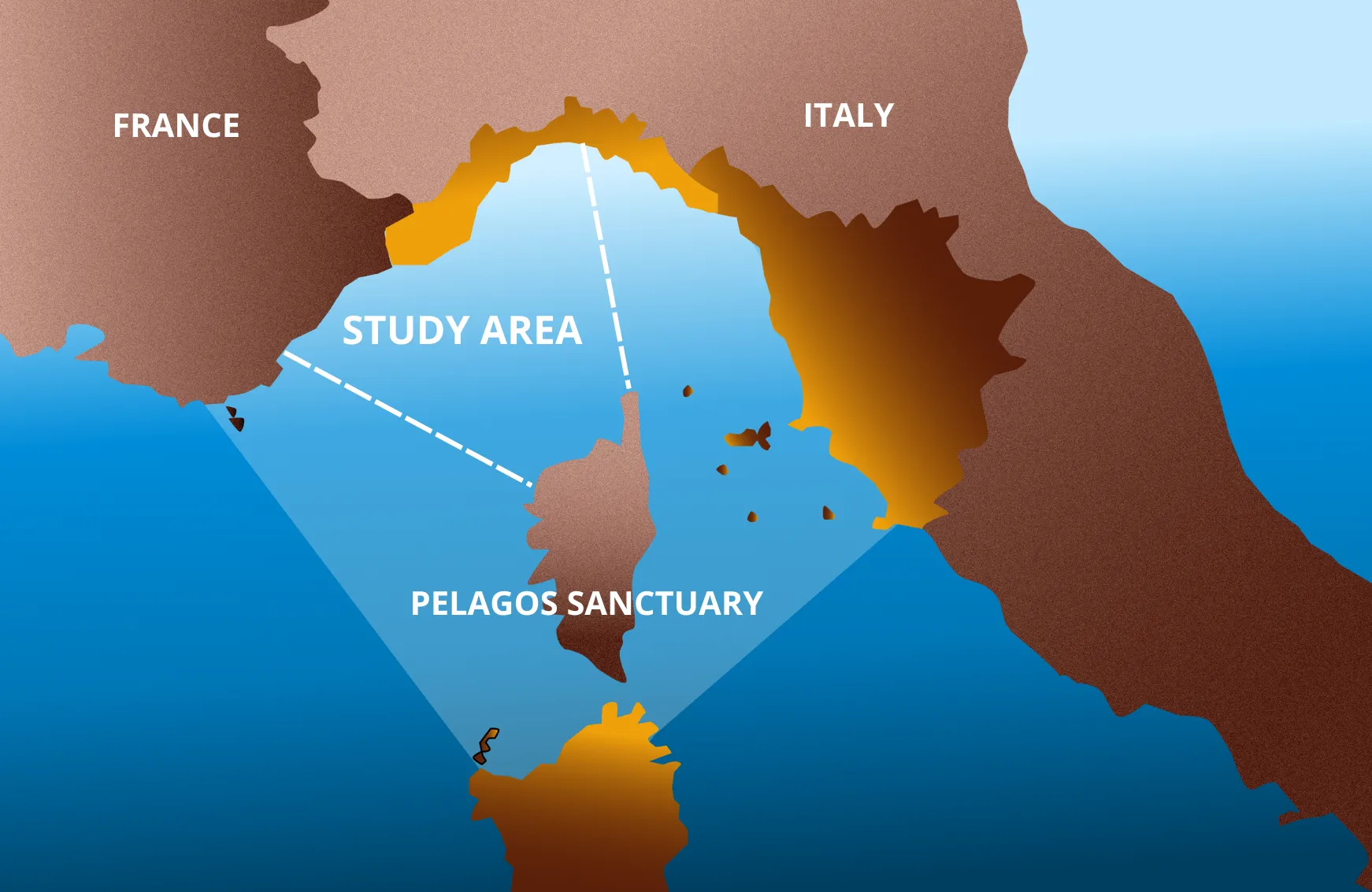
The Cetacean Sanctuary Research project focuses on the northwestern sector of the Pelagos Sanctuary, between Italy and France, primarily in the Ligurian and Provençal regions. This area covers about 25,000 km², roughly one-third of the entire Sanctuary.
The region is characterized by a narrow continental shelf dissected by steep submarine canyons, transitioning into offshore waters that reach depths of over 2,500 meters. This complex underwater landscape supports a wide range of marine habitats and is particularly important for the presence of whales and dolphins.
The Pelagos Sanctuary for Mediterranean Marine Mammals is a transboundary marine protected area covering nearly 90,000 km². Established by Italy, France, and Monaco, it includes:
The Sanctuary includes internal, territorial, and international waters, and its seabed morphology is highly variable—from broad coastal plains to deep offshore basins reaching 2,700 meters. A permanent cyclonic current, seasonal upwellings, and vertical mixing of water masses create one of the most productive marine ecosystems in the Mediterranean, rich in plankton and especially Mediterranean krill (Meganyctiphanes norvegica) – the foundation of a diverse food web.
All eight cetacean species regularly occurring in the Mediterranean are also present within the Pelagos Sanctuary
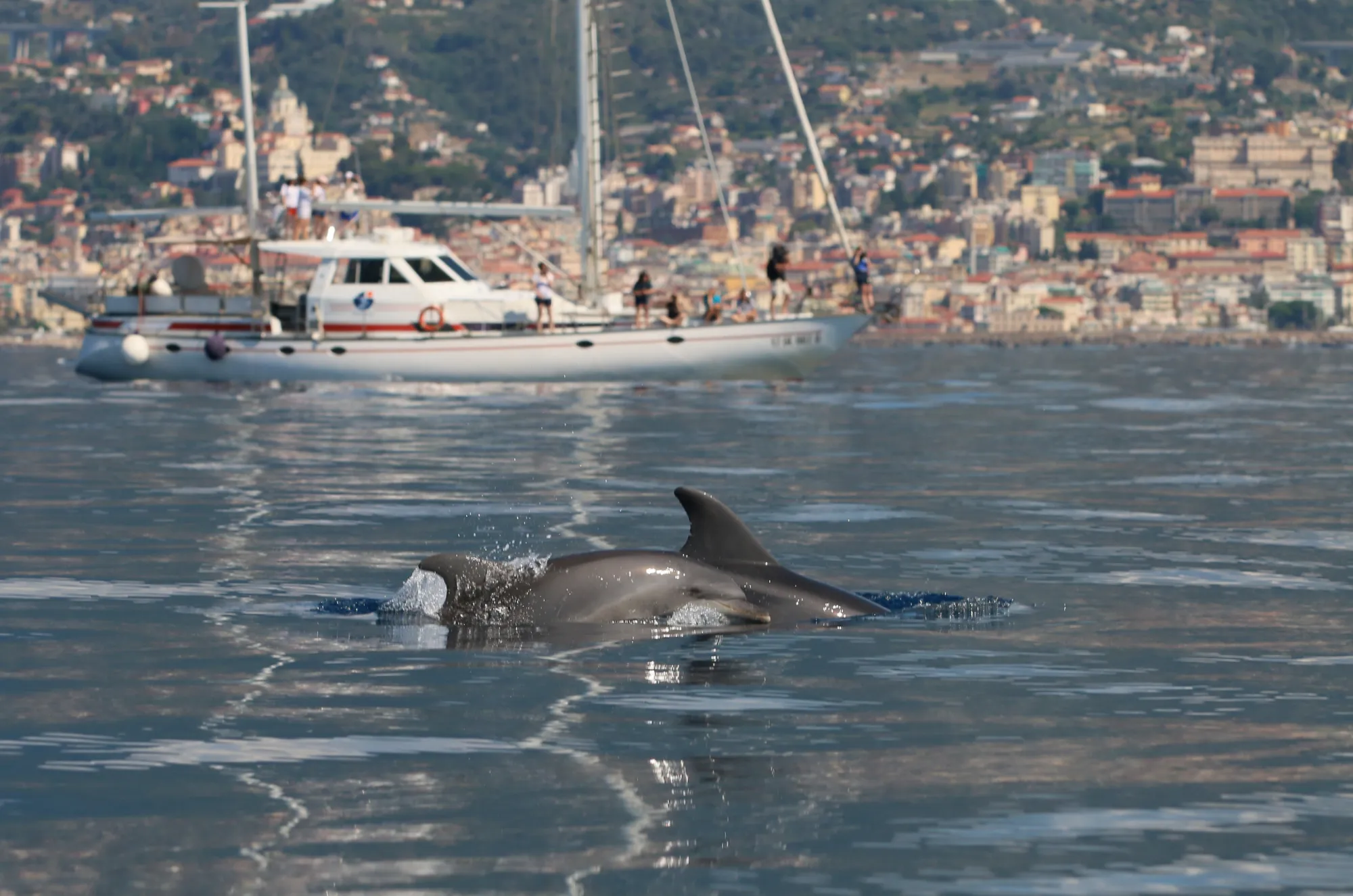
The remarkable diversity of cetaceans in the Sanctuary coexists with very high levels of human pressure. Much of the coastline, especially on the mainland, is densely populated and includes major urban areas, commercial and military ports, and industrial zones. The entire coastal zone is also a popular tourist destination, particularly crowded during the summer.
As a result, a range of human activities poses actual and potential threats to cetaceans: