Digital Whales
Balene a Milano (Whales in Milano)
Bringing whales to Milan through augmented reality

Status: Completed
Topics: Public Awareness
Start date: 01/09/2019
End date: 30/12/2020
Parent project: CSR
Project website:
Funding institutions: Fondazone Cariplo
Supporters: Civic Aquarium of Milan, Municipality of Milan, Focus Junior, Focus Wild
Target species: Fin whale, Sperm whale, Striped dolphin
Tethys role: Coordinator
Project leader: Tethys Research Institute
Verdeacqua SCS
Project manager for Tethys: Maddalena Jahoda
Fondazone Cariplo
Project partners: Verdeacqua SCS
Project subcontractors:
Tethys staff: Caterina Lanfredi
Project other staff: Paolo Gallese, Chiara Servolini, Rosanna Scotti, Nicola Castelnuovo, Claudia Fachinetti
Milestone project:
As the crow flies, the whales of the Pelagos Sanctuary (NW Mediterranean Sea), can be a mere 200 km from Milan, the second largest city in Italy. And yet, only a small number of people are even aware of their presence.
Two non-profit organisations, the Tethys Research Institute and Verdeacqua, launched the “Digital Whales” project, funded by Fondazione Cariplo, at the Milan Aquarium. The exhibit was available to visitors from September 2019 to September 2020, with the main goal of raising public awareness about cetaceans, their vulnerability, and their ecological importance.
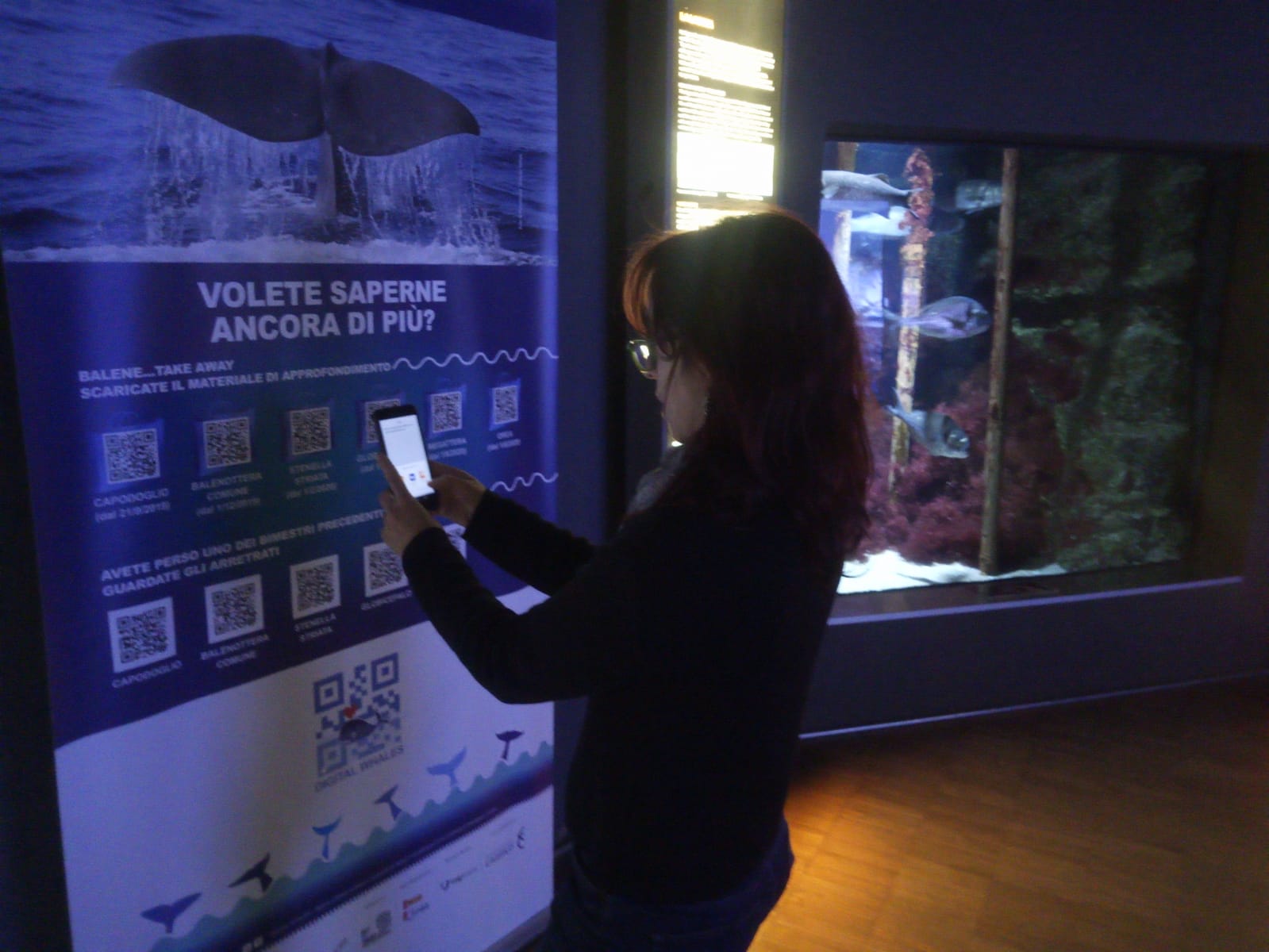
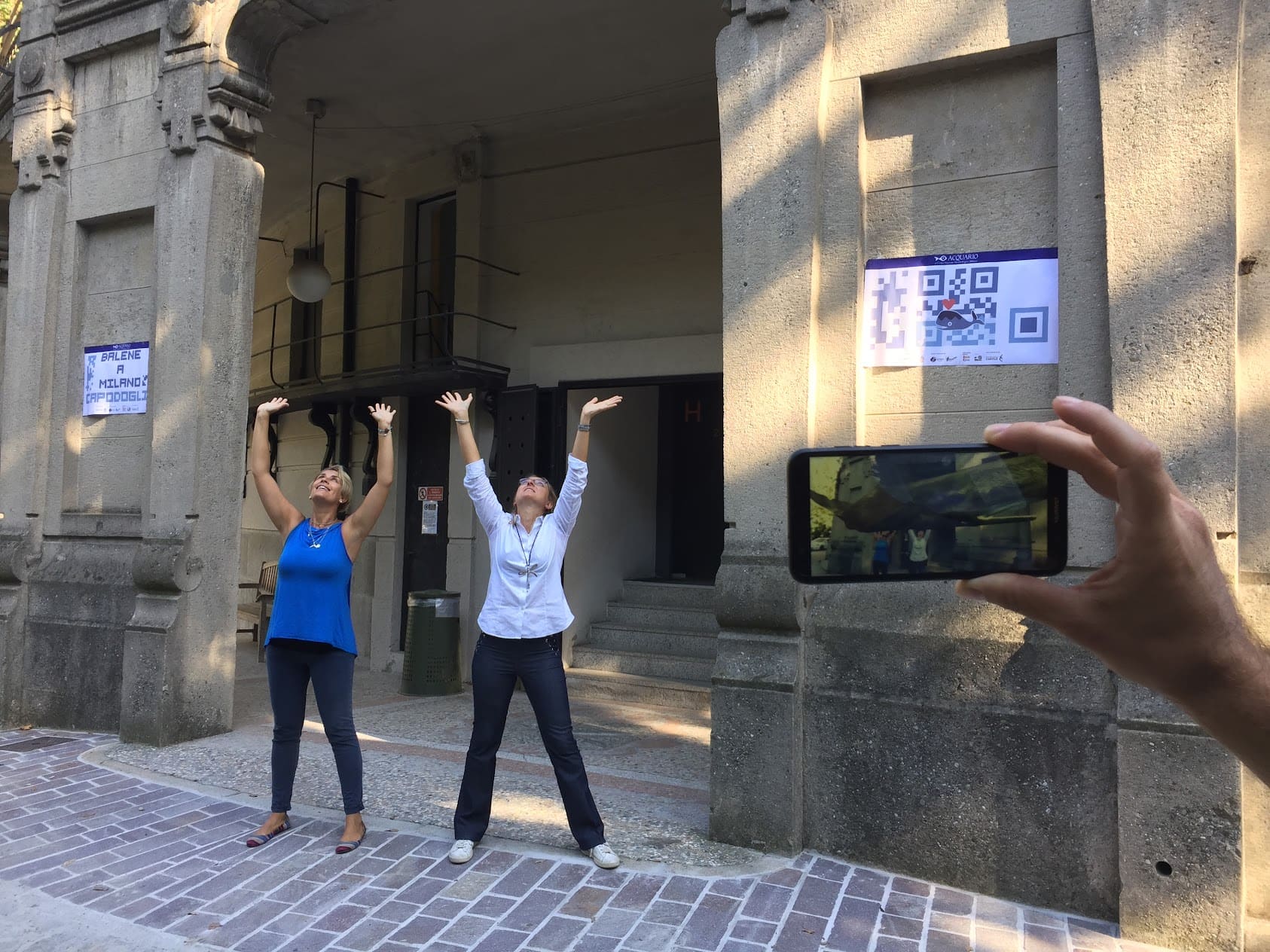
As part of the exhibition, information and stories about whales and dolphins—as well as related research and conservation topics—were presented through short multimedia features (videos, images, animations, audio, and text), accessible through a QR code on personal devices such as tablets and smartphones.
Approximately 150 "nuggets" of information were organized into six main themes, with one new theme added every two months, along with additional research materials available for download at the end of the visit.
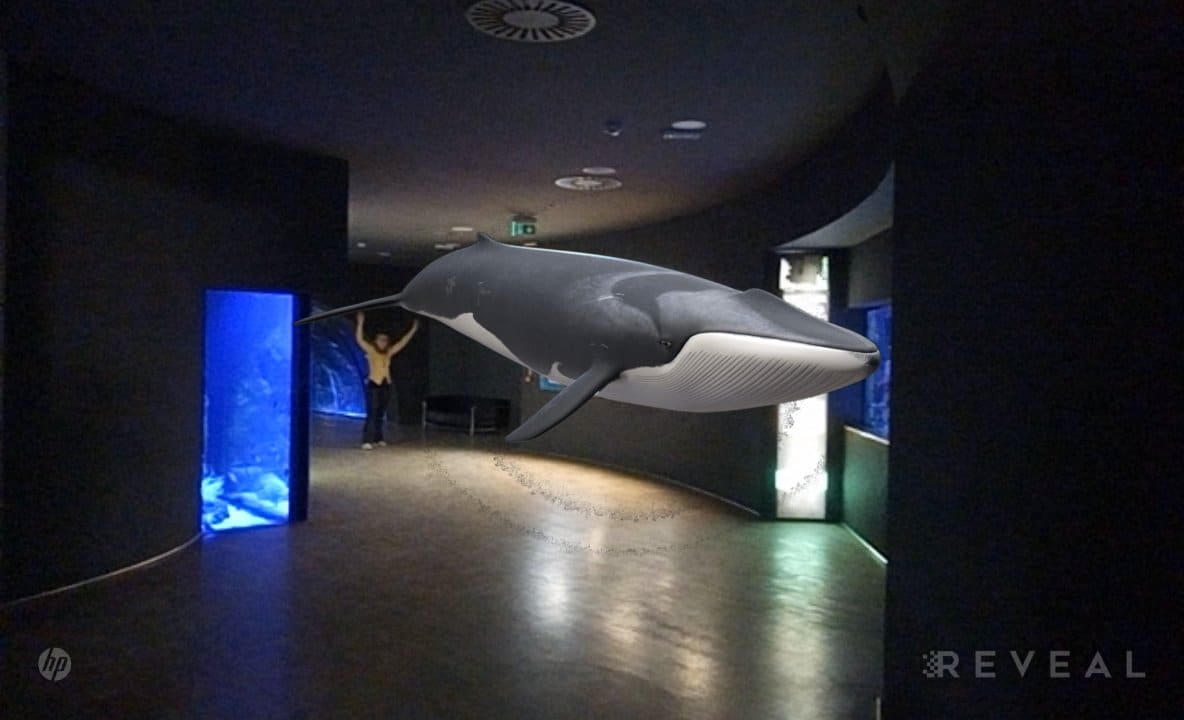
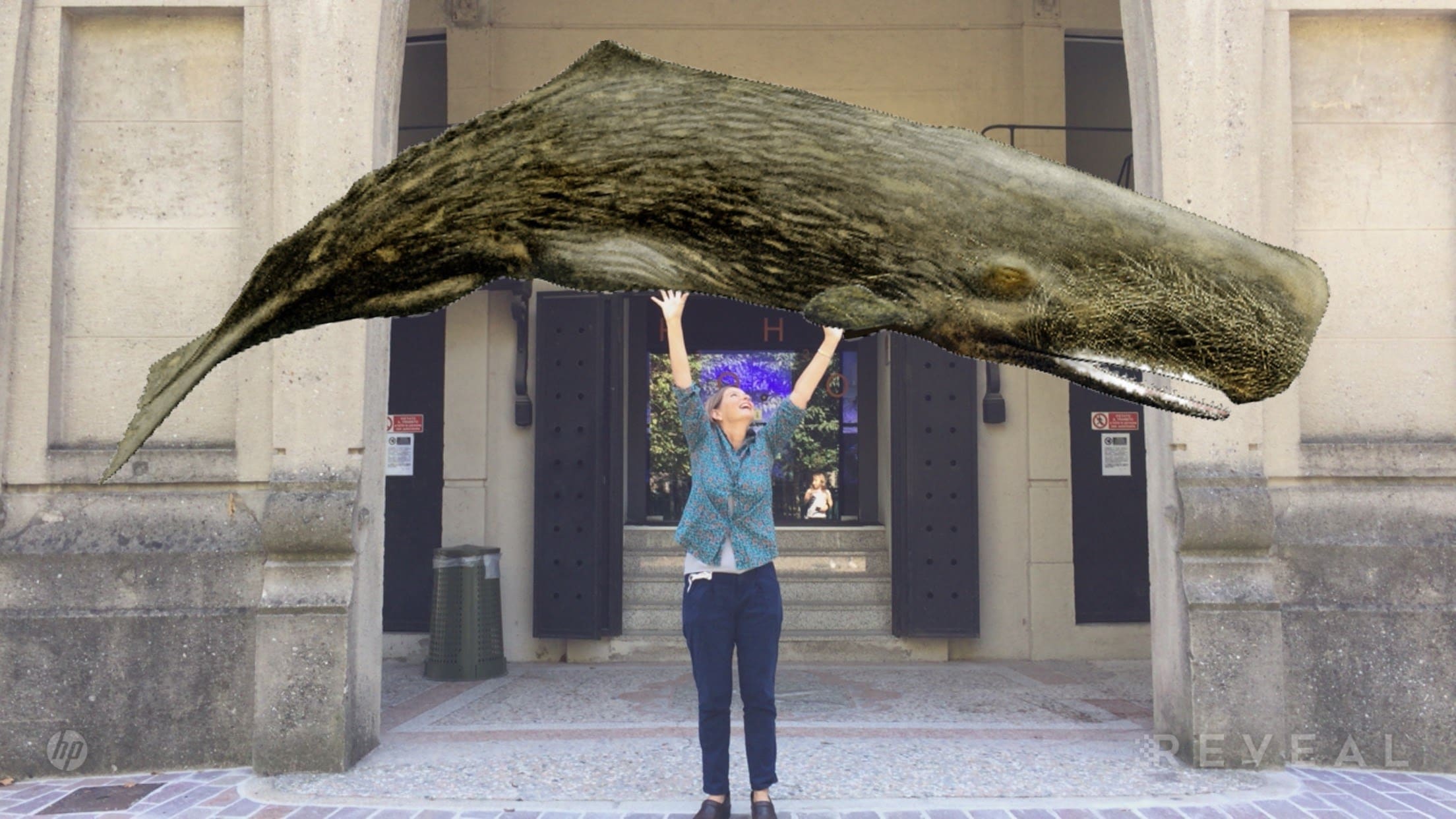
The most spectacular elements of the exhibition were life-sized augmented reality models of six flagship species, custom-designed by a digital media artist. A new model was introduced every two months. Four of these species are regular Mediterranean residents—sperm whale, fin whale, striped dolphin, and long-finned pilot whale—while the other two, humpback whale and killer whale, are occasional visitors to the region.
The models were highly detailed and animated, allowing visitors to observe them closely, move around them, and even take photos with them.
Augmented reality proved to be a powerful educational tool; in this context, it helped show that whales are much closer to us than one might think, that they have a real impact on our future, that they deserve protection—and, last but not least, that virtual reality should be the only way to display them in an aquarium.
Originally designed to be experienced in person at the Milan Aquarium, the project was made available online during the second half of its duration due to the COVID-19 pandemic.
The concept behind Digital Whales was presented at the Arts and Communications Workshop during the World Marine Mammal Conference held in Barcelona, Spain, in 2019.