LIFE SeaDetect
Marine automated DETECTion and anti-collision system with cetaceans
An automated and multi-sensors detection system for reducing collisions between large whales and ships
Status: Ongoing
Topics: Public Awareness, Research
Start date: 01/01/2022
End date:
Parent project:
Project website: https://life-seadetect.eu/
Funding institutions: EC LIFE Grant
Ocean Care
ACCOBAMS
Target species: Fin whale, Sperm whale
Tethys role: Partner
Project leader: Naval group
Project manager for Tethys: Simone Panigada
Project partners:
Project subcontractors:
Project staff: Nino Pierantonio, Arianna Azzellino, Maddalena Jahoda, Elena Politi, Margherita Zanardelli
Project other staff:
Milestone project:
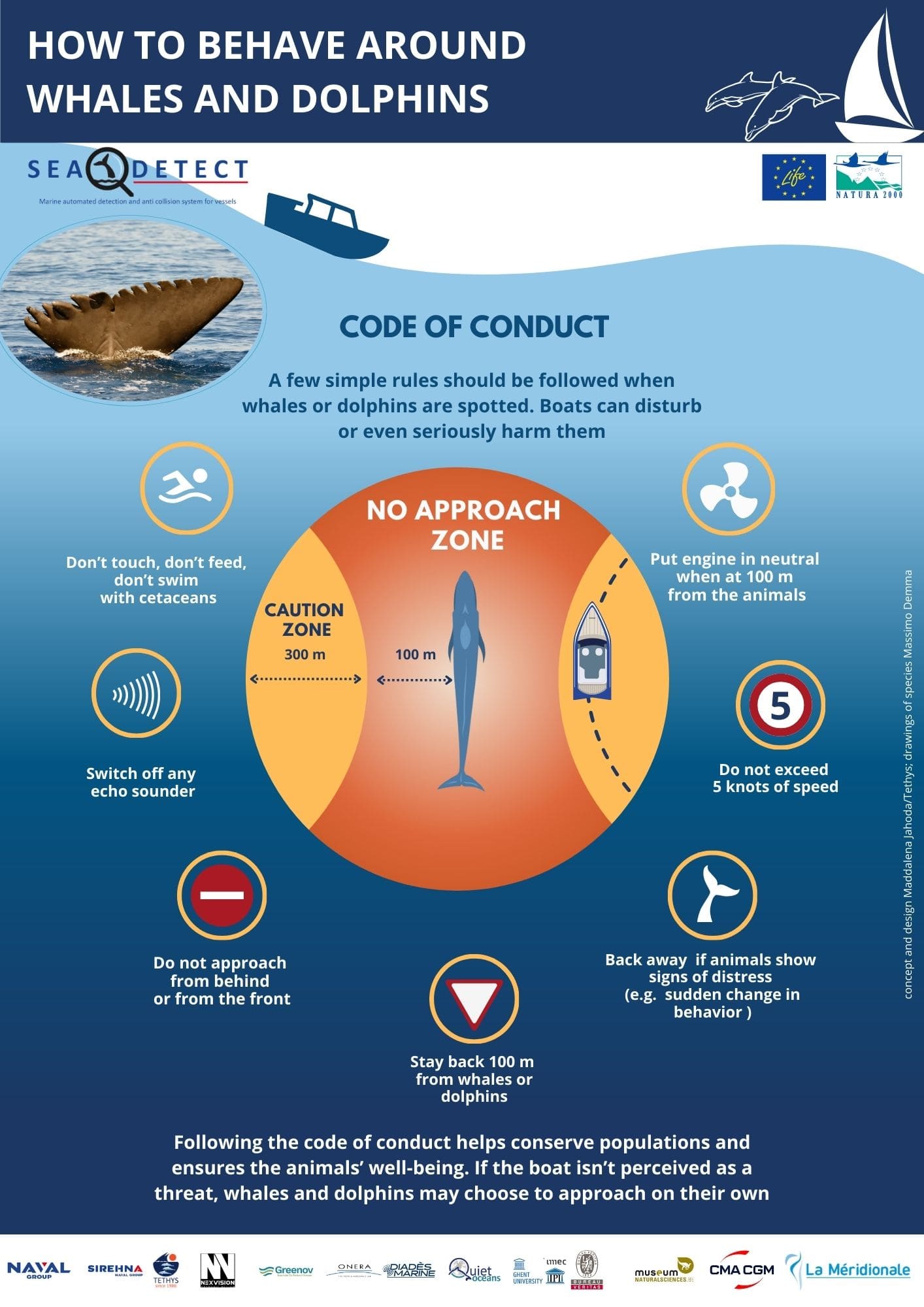
LIFE-SEADETECT is a European collaborative project involving participating organisations from 3 countries (France, Belgium, Italy). The project is aimed at creating an automated system for reducing the risk of collision between vessels and marine mammals or other floating obstacles.
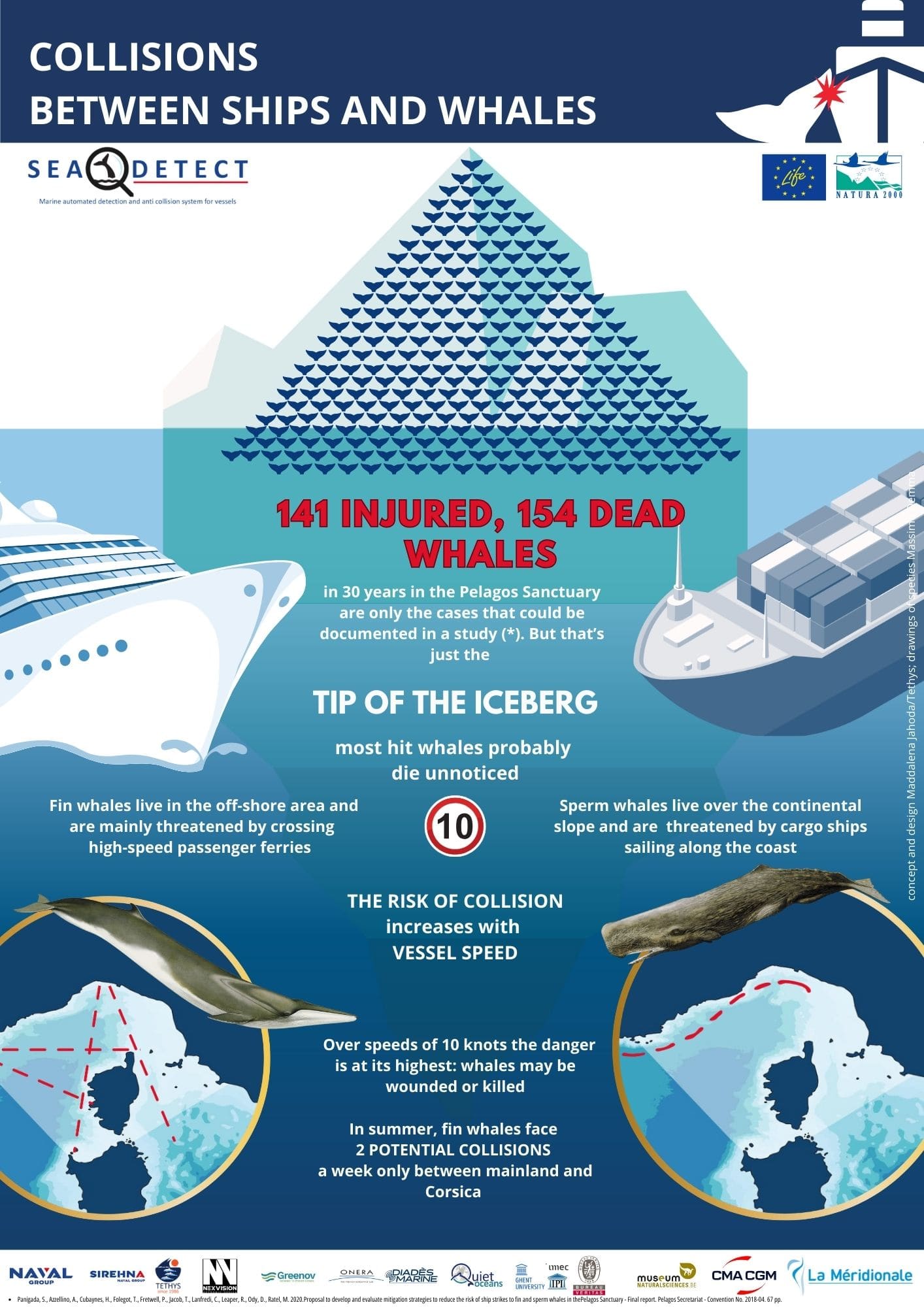
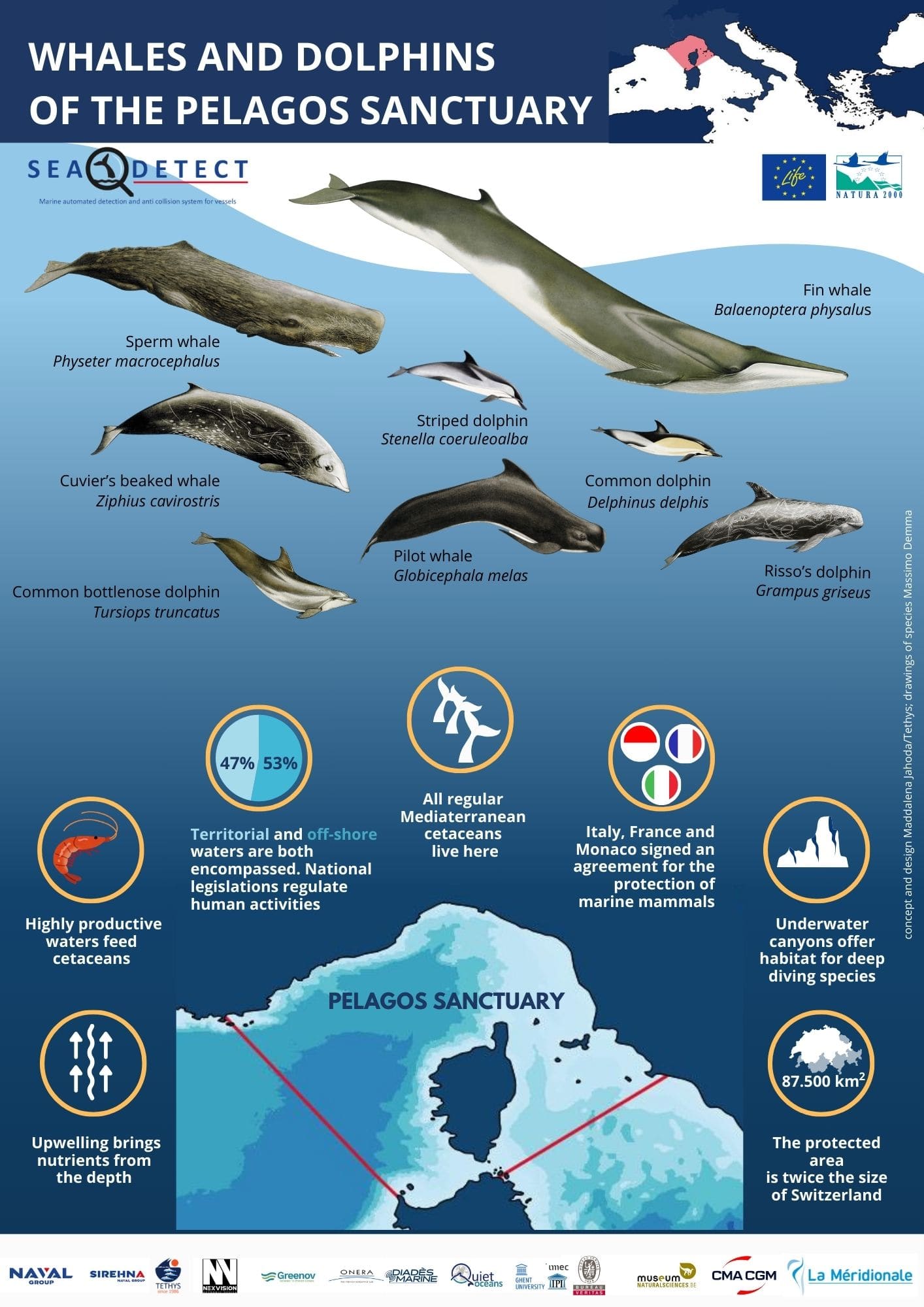
Collisions with boats, particularly high-speed ones, are among the leading causes of non-natural mortality for large cetaceans in all oceans, but especially in the Pelagos Sanctuary (North-Western Mediterranean), a high-risk area, due to a high density of both cetaceans and vessels. It has been estimated that along the route of large ships to and from Corsica in summer there are no less than two potential collisions per week. Passenger ships cross risk-areas 60% of the time, and maritime traffic has increased by 50% in the last decade alone. Eight to 40 fin whales per year are estimated to potentially suffer a collision event, but figures are largely underestimated, since only known cases are being taken into account.
Several mitigation measures have been proposed, but none has proven to be a definitive solution so far. Rerouting vessels is not feasible within the Sanctuary, as the two large species—fin whales (Balaenoptera physalus) and sperm whales (Physeter macrocephalus)—occupy different habitats. Furthermore, enforcing a significant reduction in vessel speed often conflicts with the operational demands of shipping companies.
The goal of Life-Seadetect is the implementation of three complementary systems:
The LIFE SEADETECT system aims to ensure the detection of cetaceans day and night in real-time, with a radius range of at least 1 km in most of the weather conditions.
Tethys is leading the action 'Assessment of cetacean behaviour near vessels' and is also involved in all the other actions, including scientific outreach to the general public.
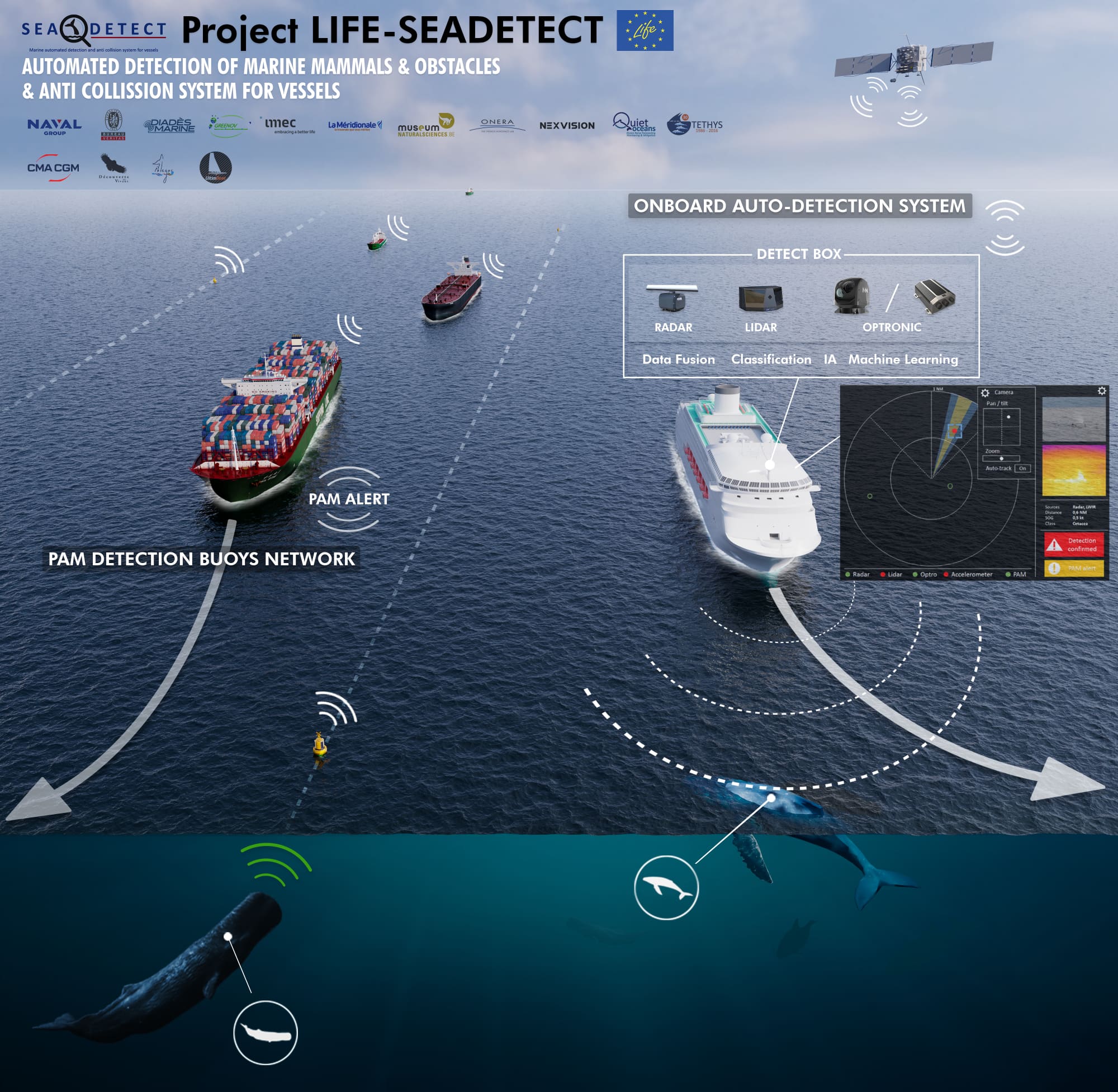
Under the framework of project LIFE SeaDetect an automated onboard detection system, a real-time passive acoustic monitoring network at sea and a real-time detection-sharing and alert system are being developed and tested. To aid the SeaDetect project goals, multi-sensors devices were deployed to assess fin whales behaviour and interactions with approaching maritime traffic. A qualitative overlap with tracking and AIS data showed that feeding areas closely coincide with heavy traffic levels, increasing the risk of collision. Our analysis show that whales do not appear to avoid areas of heavy ship traffic and that their behaviour makes them susceptible to high risk of collision