Results

Cetacean Sanctuary Research

Results

Cetacean Sanctuary Research
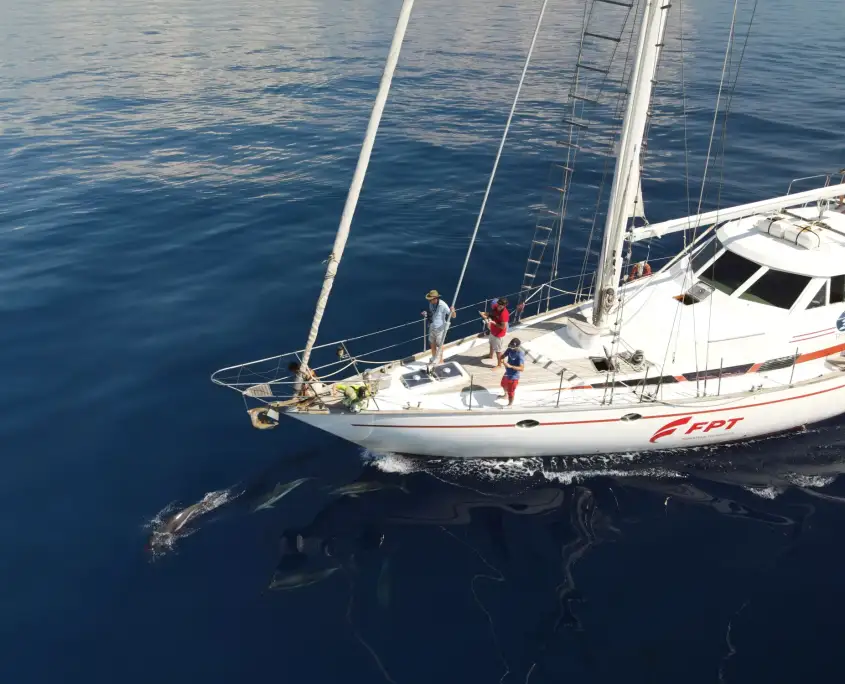
Since its launch in 1990, the CSR Project has been continuously monitoring the western Pelagos Sanctuary collecting data every summer, building one of the most extensive datasets on Mediterranean cetaceans.

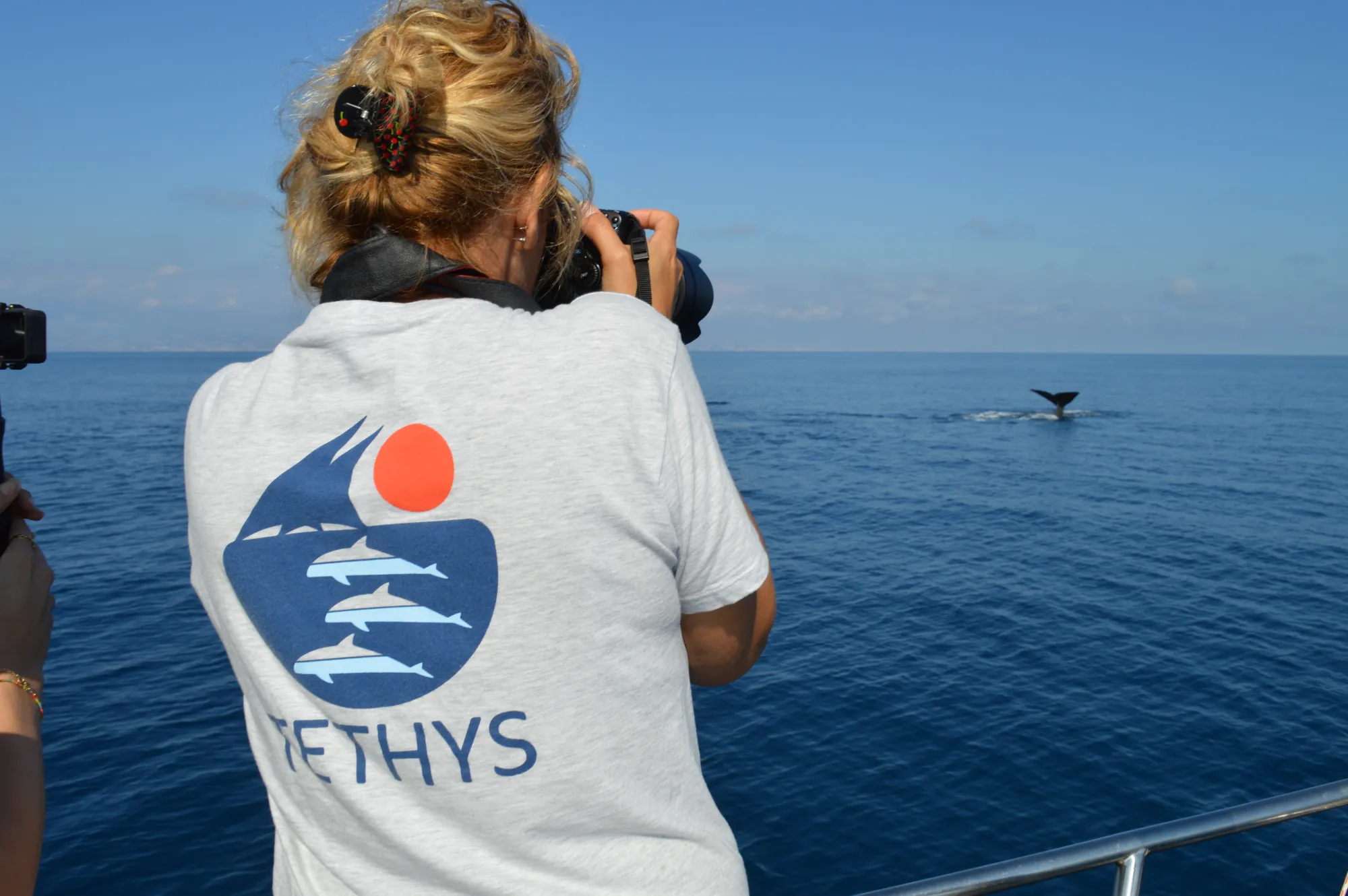
Each season, researchers spend approximately 80 days at sea, covering more than 4,500 kilometers under standardized research conditions. This long-term effort has led to over 7,000 cetacean encounters.

Four decades of research have produced a vast dataset that has deepened understanding and improved the conservation of marine mammals in the Pelagos Sanctuary and across the Mediterranean through open data sharing.

Results of the CSR project span a wide range of research areas, including:

  • Continuous visual and acoustic monitoring of species presence throughout the study area;
  • Creation of extensive photographic catalogues, comprising over 1,500 photo-identified individuals from seven different cetacean species;
  • Site-fidelity, movements and life history of specific individuals;
  • Population size estimates in the study area for most species;
  • Analyses of long-term trends in both relative and absolute abundance, covering nearly four decades of data;
  • Identification of habitat preferences and spatial patterns in species distribution;
  • Insights into the spatial variability of foraging sites;
  • Insights into the species vocal repertoire;
  • Insight into the species health status and genetics;

Key insights

Over the years, numerous results have been achieved—many of which are especially significant for the conservation of these animals.

  • Notably, long-term monitoring has revealed significant shifts in the presence distribution and abundance of several species:
    • Since the 1990s, a declining trend has been observed in fin whales (Balenoptera physalus)
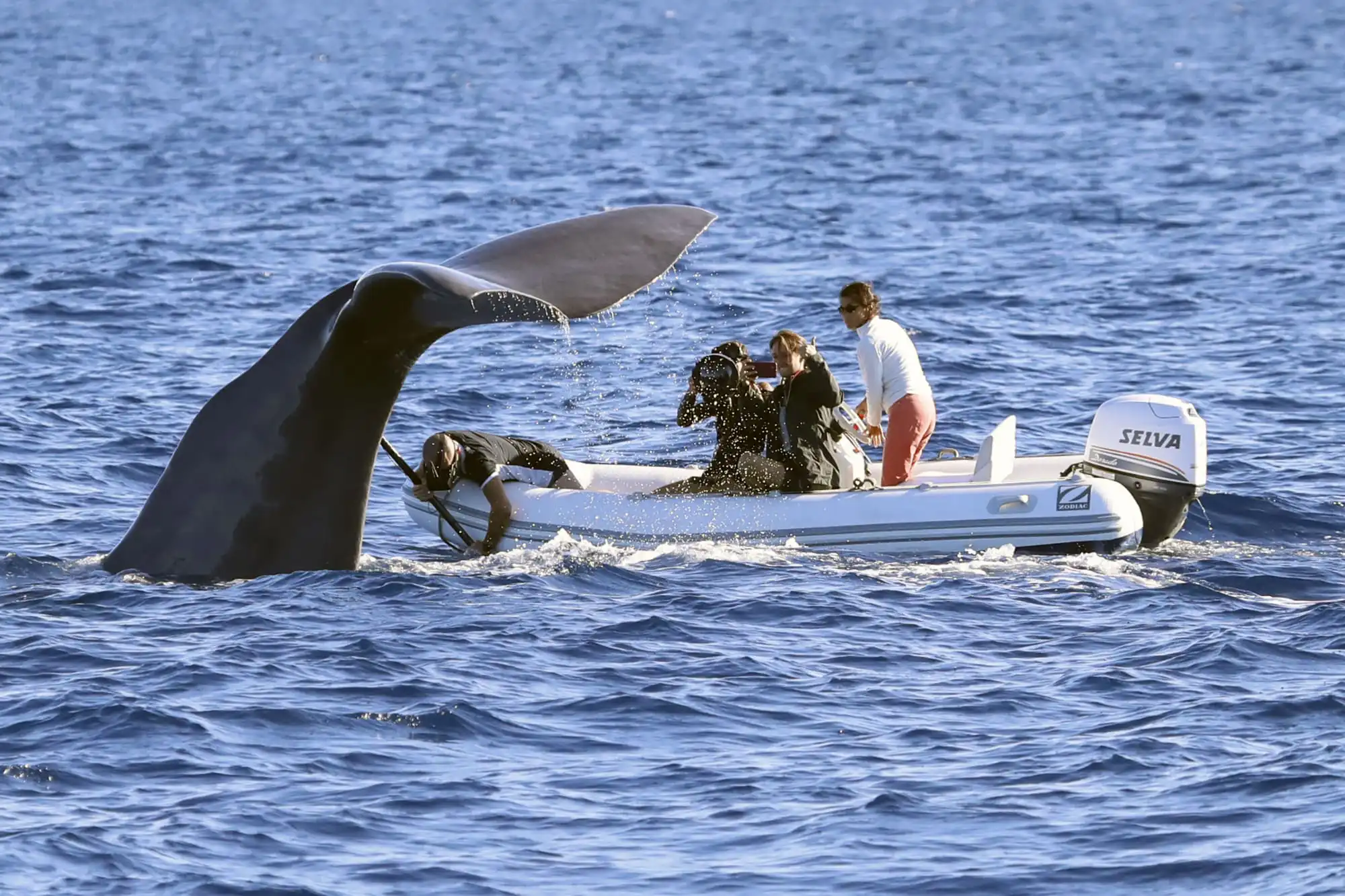
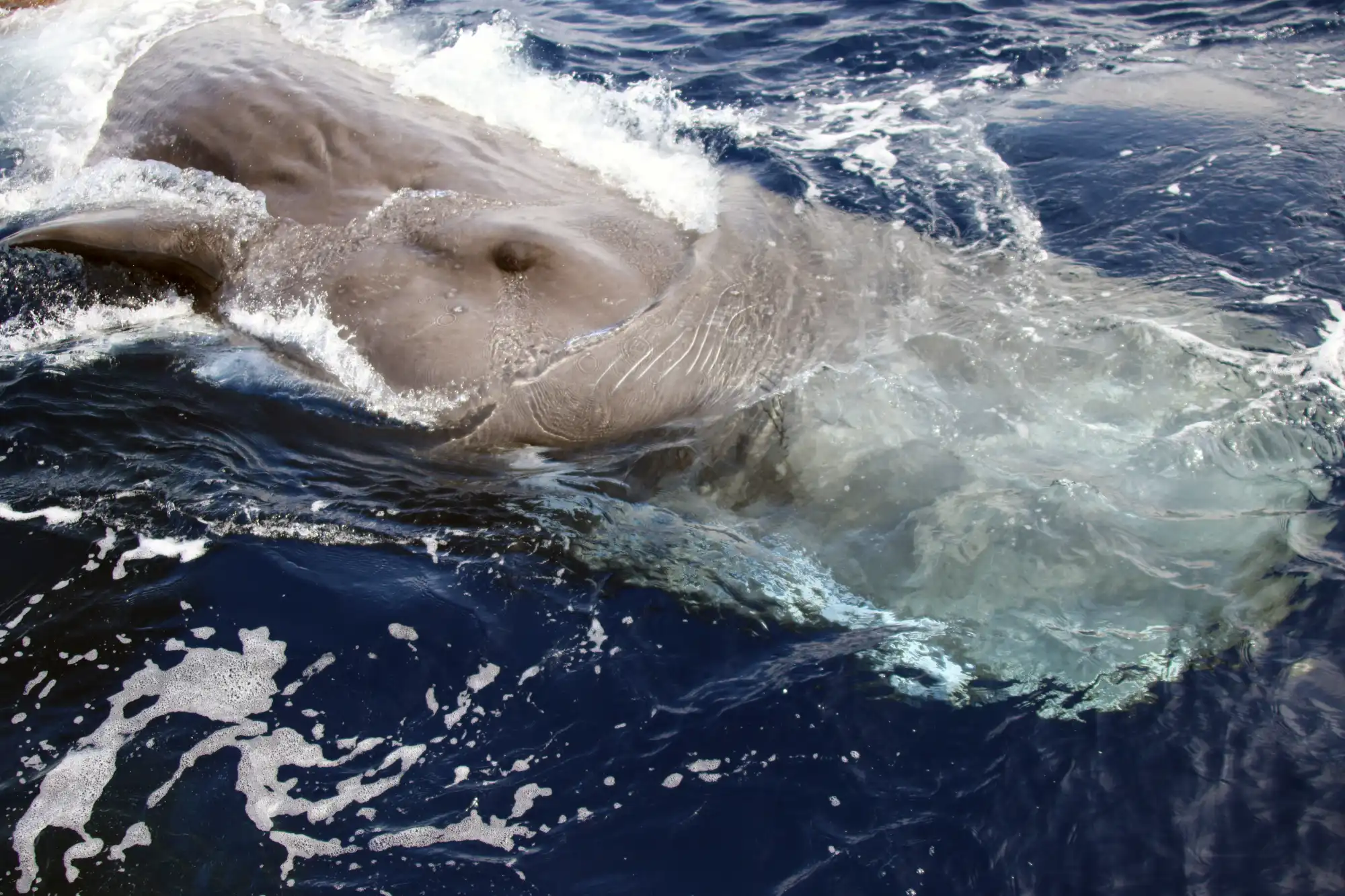
    • Sperm whales (Physeter macrocephalus ) have shown an increasing presence in the area
    • Common bottlenose dolphins (Tursiops truncatus), once rare in the western Ligurian Sea, experienced a notable increase since 2015
    • Risso’s dolphins (Grampus griseus) have dramatically declined in the western portion of the Pelagos Sanctuary.
  • A substantial acoustic database with over 1,500 recordings of cetacean vocalizations, has provided insights into the vocal repertoires of different species. These data have helped characterize species-specific sounds in particular for sperm whales and long-finned pilot whales exploring the role of sound in communication and foraging and, in the case of sperm whales, have also been used to estimate body size and growth rate.
  • The presence of injuries, scarring, or mutilations—mainly in fin and sperm whales—likely caused by collisions with vessels was revealed.
  • Photo identification data also contributed to better understanding the cetaceans short- and medium-range movements and in particular for sperm whales the long range movements at Mediterranean scale.
  • The analysis of biological samples such as fecal samples allowed to identify the presence of anthropozoonotic parasite, bacterial records and heavy metals in free-ranging fin and sperm whales.
  • The use of velocity time-depth recorders (v-TDRs) has revealed unexpected diving capabilities in some species. Fin whales have been recorded diving to depths greater than 470 meters, while long-finned pilot whales have reached depths exceeding 820 meters.
  • Behavioral responses of fin whales to the presence of boats have been described and can serve as a scientific basis for the development of specific guidelines to minimize disturbance.
  • Early genetic analyses based on tissue samples revealed an unexpected genetic differentiation between fin whales in the Ligurian Sea and their conspecifics in the North Atlantic. Similarly, data from Tethys projects identified genetic divergence between Mediterranean and North Atlantic sperm whales at both microsatellite DNA and mitochondrial DNA (mtDNA) loci.
  • Moreover, mtDNA analyses indicated that the Mediterranean population of Risso’s dolphins is genetically distinct from oceanic populations, suggesting the possible existence of a regional subpopulation within the Mediterranean basin.

Data availability

Most of the CSR sightings are publicly accessible online via

Ocean Biogeographic Information System – Spatial Ecological Analysis of Mega-vertebrate Populations (OBIS-SEAMAP). http://seamap.env.duke.edu/

Global Biodiversity Information Facility (GBIF) https://www.gbif.org/

European Ocean Biodiversity Information System – EurOBIS https://www.eurobis.org/.

Data including photo-identification data are also available on the INTERCET platform  https://www.intercet.it/ upon requests

By sharing its data on online platforms, the CSR project contributes to a collaborative effort aimed at enhancing knowledge of cetacean ecology across the Mediterranean. To date, data have supported peer-reviewed studies on fin whale habitat use and bottlenose dolphin habitat and movements. Many of the project’s findings have been published in scientific journals, advancing the global understanding and conservation of Mediterranean cetaceans.
Publications

id authors year title source doi project type
147 Fadda V., Airoldi S 1999 Nota sulla permanenza dei graffi sulla pinna dorsale del grampo IV National Meeting on Cetaceans, Milano, Italy, 11-12 November 1999. CSR Conference
156 Airoldi S., Azzellino A., Nani B., Ballardini M., Bastoni C., Notarbartolo di Sciara G., Sturlese A 1999 Whale watching in Italy: results of the first three years of activity European Research on Cetaceans 13:153-156. CSR Conference
157 Fadda V., Airoldi S 2000 A note on the persistence of dorsal fin scars on Risso’s dolphins photo-identified  in the Ligurian Sea European Research on Cetaceans 14:323. CSR Conference
159 Gaspari S., Azzellino A., Airoldi S., Hoelzel A.R 2000 Association patterns of Risso’s dolphins (Grampus griseus) in the north-west Mediterranean European Research on Cetaceans 14:138. CSR Conference
170 Marsili L., Fossi M.C., Neri G., Airoldi S., Bearzi G., Panigada S 2000 Skin biopsies for cell cultures from Mediterranean free-ranging cetaceans European Research on Cetaceans 14:231-233. CSR Conference
authors year title source type