Study area
Ionian Dolphin Project


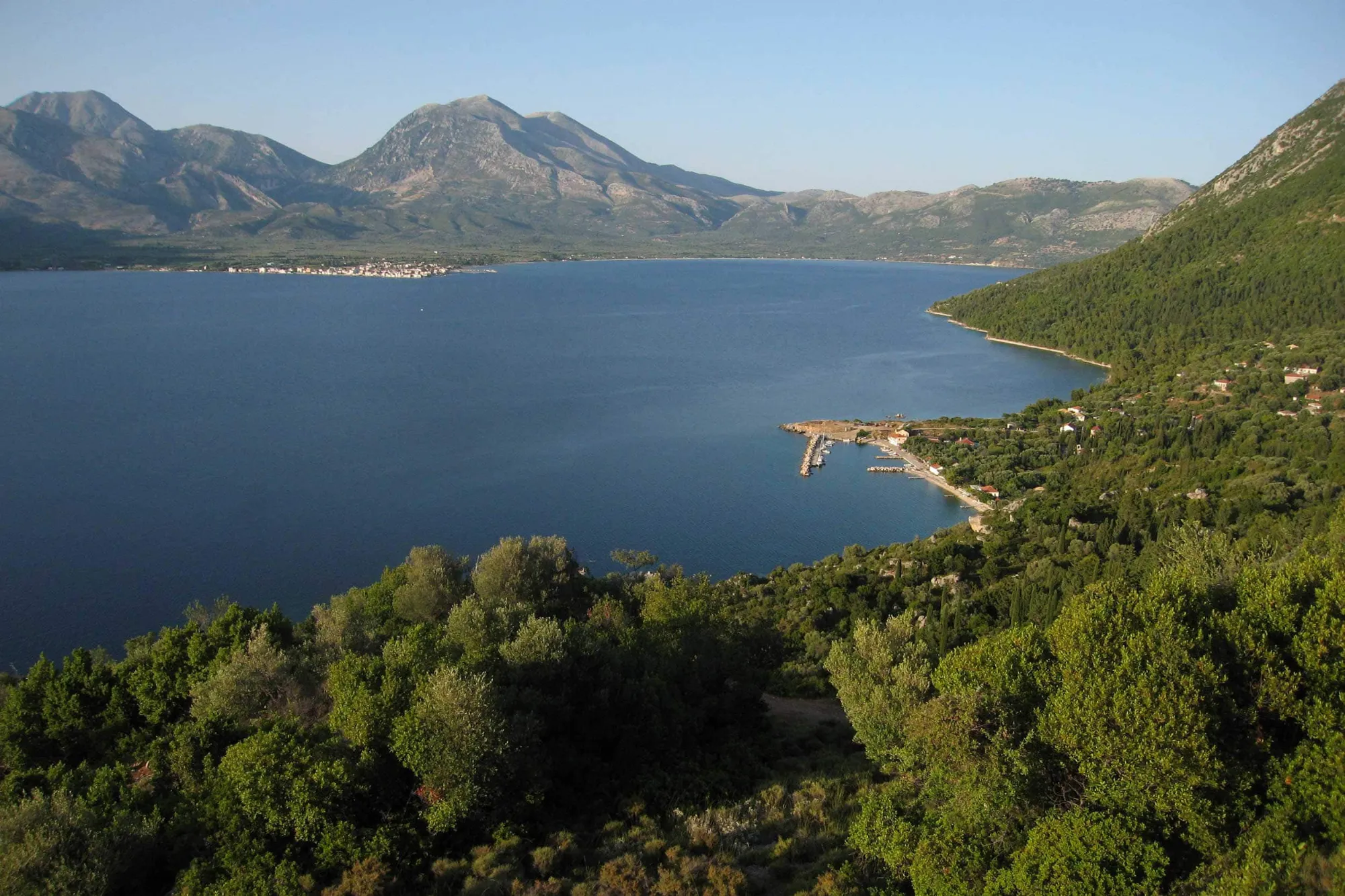
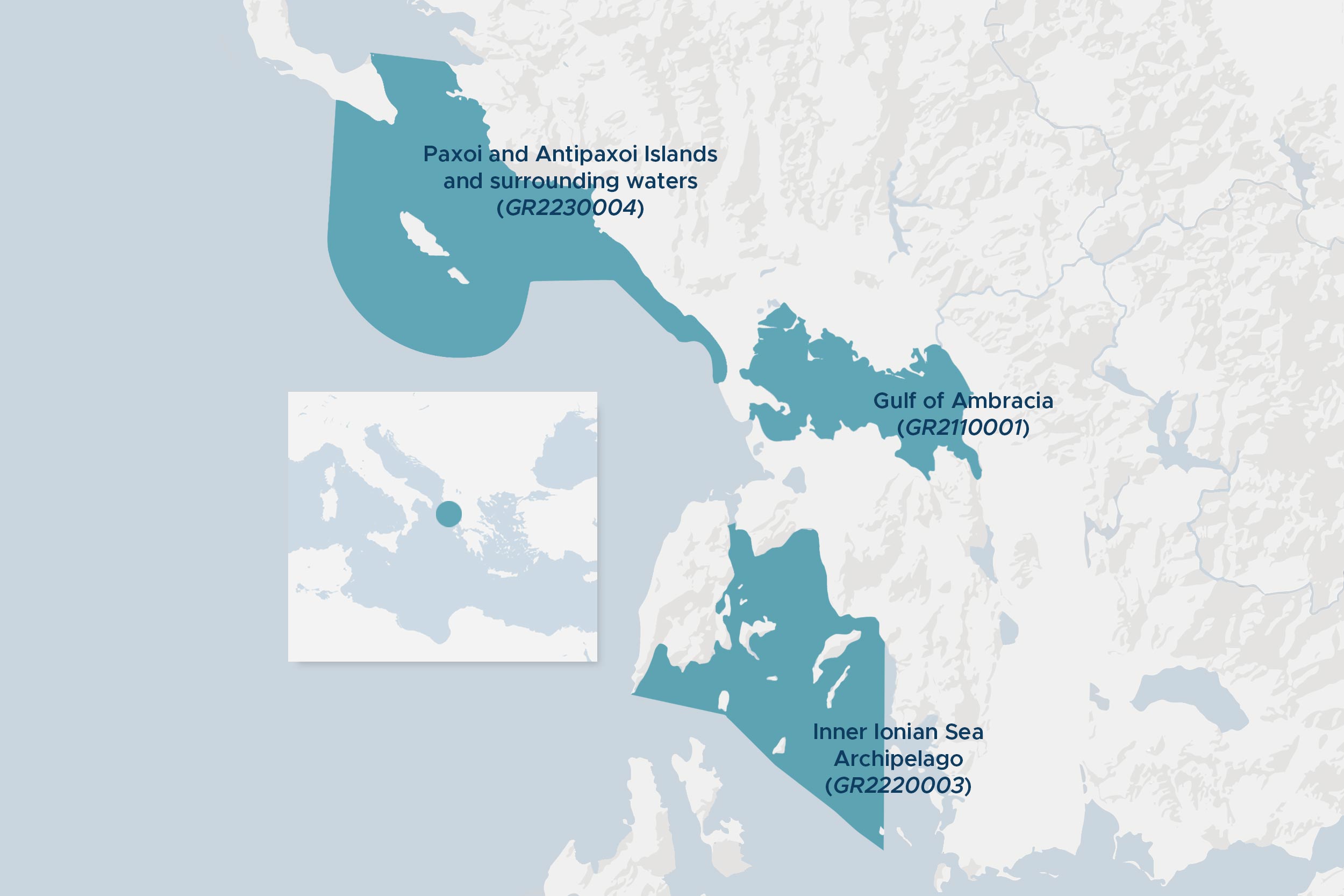
The Gulf of Ambracia is a semi-enclosed embayment of 405 km2, whose only communication with the Ionian Sea is the narrow and shallow Preveza Channel. On average, the depth of the Gulf is approximately 30 m (maximum 60 m), and its bottom mostly consists of mud and sand. The Gulf, where the only cetacean species present is the bottlenose dolphin, is an Important Marine Mammal Area, while being also recognised as an Important Bird Area and an Important Shark and Ray Area.It provides important feeding ground for the loggerhead sea turtle Caretta caretta and, in recent times, a few sightings of monk seals have been also reported. However, the Gulf’s biodiversity is threatened by high and increasing eutrophication and pollution.
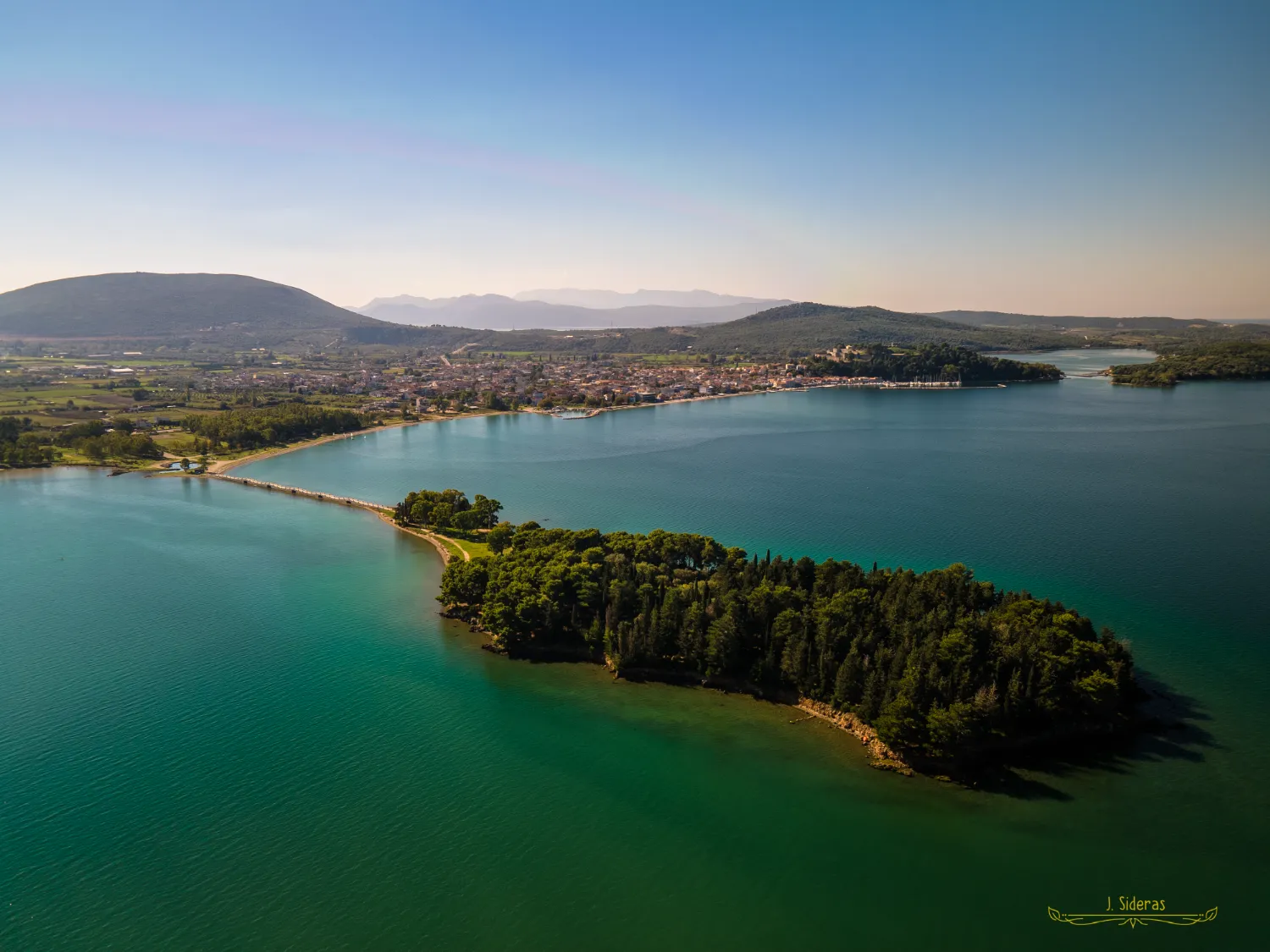
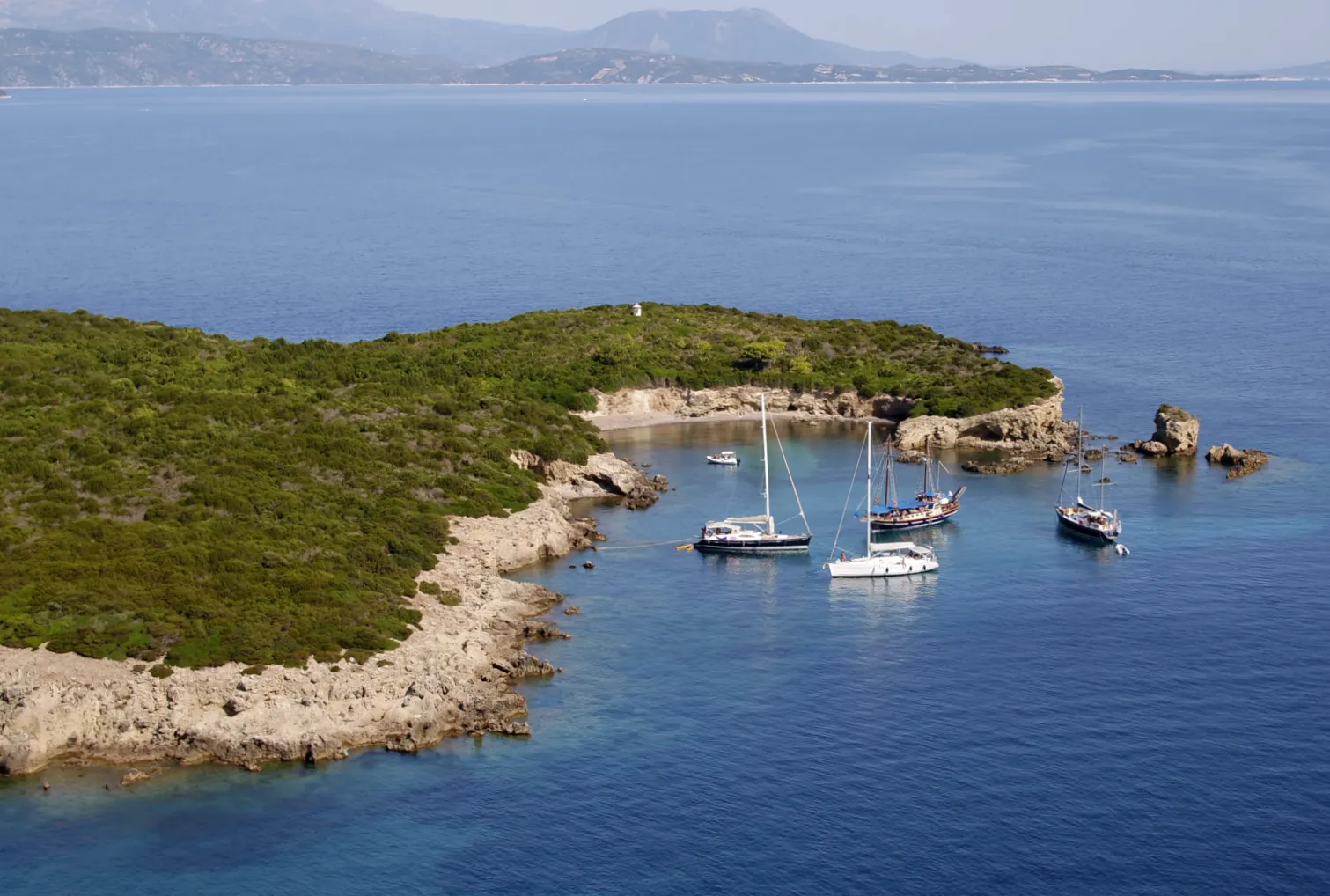
The Inner Ionian Sea Archipelago covers an area of 865 km2. Its sea floor is mostly 50-250 m deep, with rocky coasts and shallows covered by seagrass meadows. The Archipelago offers critical habitat to species included in Annex II to the Habitats Directive, namely the bottlenose dolphin (Tursiops truncatus), the Mediterranean monk seal (Monachus monachus), the loggerhead sea turtle (Caretta caretta) and the giant devil ray (Mobula mobular). Both bottlenose and common dolphins (Delphinus delphis) are present in the area. The striped dolphin (Stenella coeruleoalba) has also been observed but far less frequently.
The Paxoi and Antipaxoi islands and their surrounding waters cover an area of about 1,355 km². This group of calcareous islands and islets is characterized by rocky, eroded coastlines and includes the surrounding territorial sea, extending to the waters around southern Corfu and the nearby western mainland coasts.
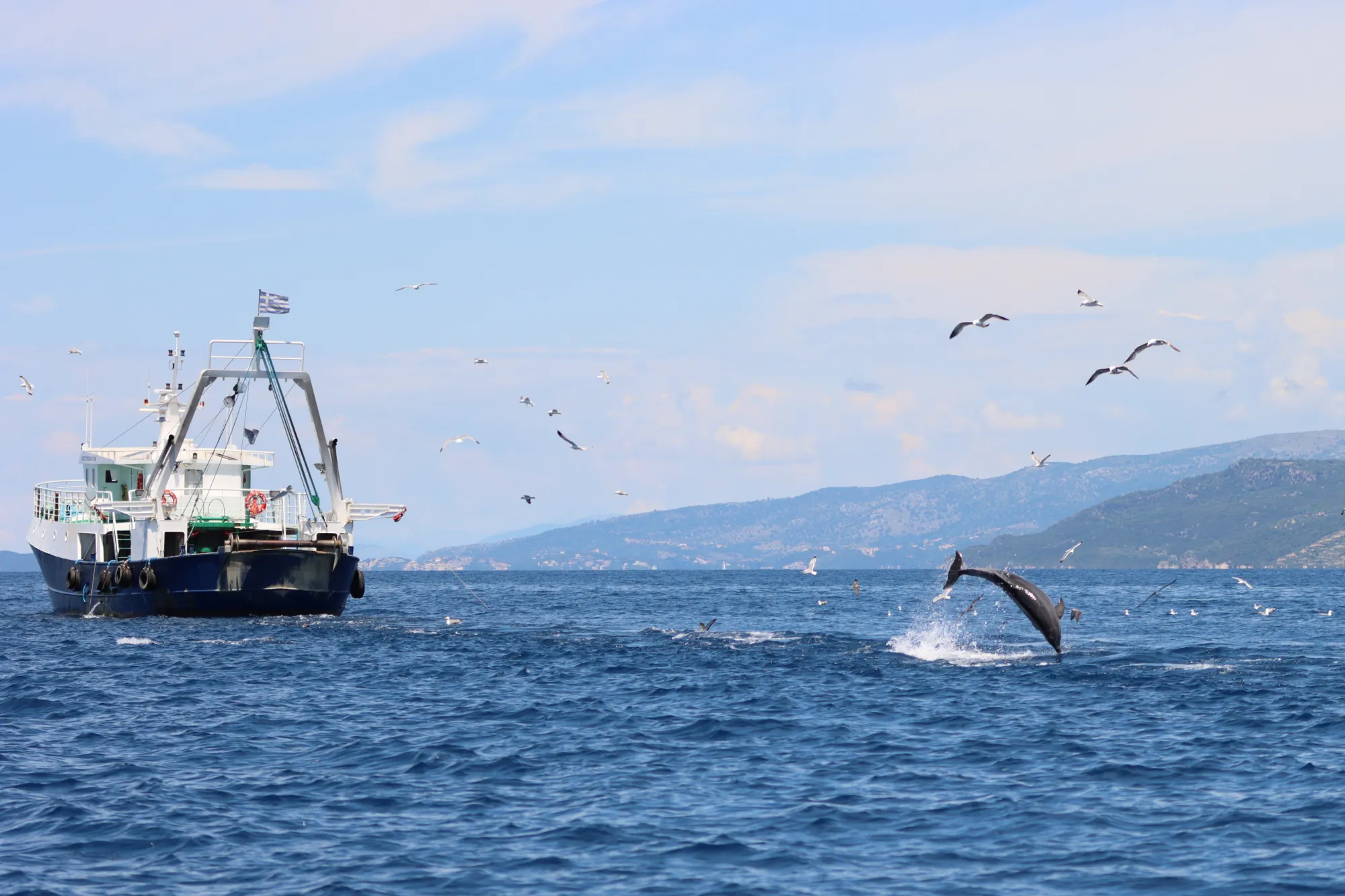
Most of the site’s marine area consists of shallow waters (less than 200 m deep) inhabited by both bottlenose and common dolphins. Further west, beyond the Paxoi-Antipaxoi Islands, the seabed drops rapidly, creating suitable habitats for slope and pelagic cetacean species. Bottlenose and common dolphins are regularly observed in the area, often interacting with bottom trawlers, while groups of striped dolphins are seen in its deeper western waters. The Mediterranean monk seal is occasionally reported.